I’ve been somewhat baffled by the debate around how to regulate BNPL. The case for stronger consumer protection is getting hard to miss.
Nearly half of US users report a late payment. Loan stacking is common. And BNPL is used primarily by people already carrying significant debt.
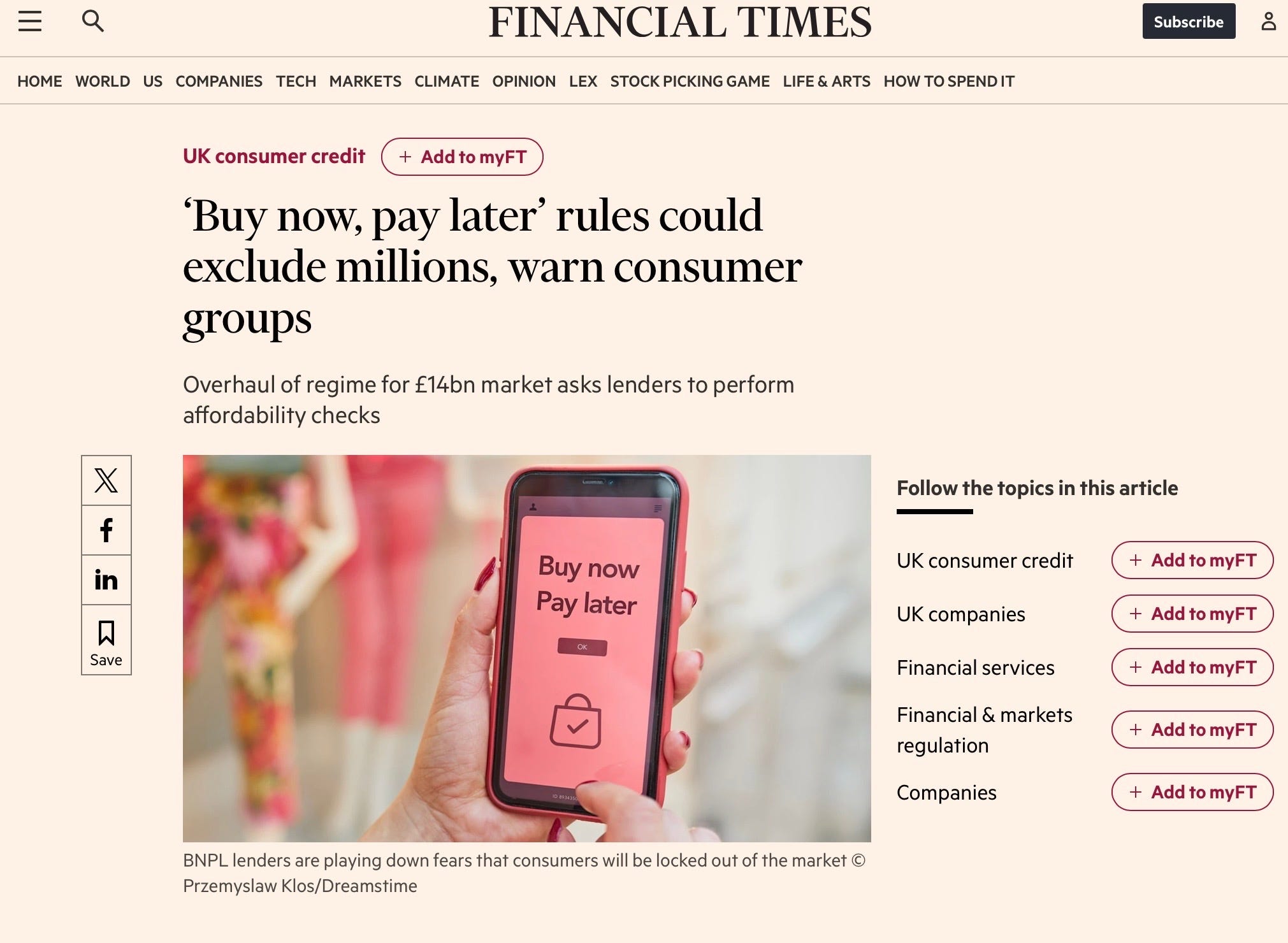
The UK debate makes the tension particularly clear. New rules will require lenders to conduct affordability checks, and consumer groups have warned that this could exclude millions of people who currently use BNPL. That is a real concern. But it is also a slightly strange reason not to protect people from unaffordable borrowing in the first place.
There is a legitimate counterfactual question: if tighter rules reduce access to BNPL, what happens next? Do people move to more expensive credit? Or just borrow and spend less?
We need much better evidence on that. And if consumption falls, I’d also like to know what kind of consumption. Missing an essential purchase is very different from skipping something BNPL made easier to buy.
There is surprisingly little research that answers this cleanly. We know quite a bit about who uses BNPL, repayment problems and overlapping borrowing. But evidence on what happens when access disappears is much thinner. Following consumers who fail an affordability check would tell us whether they substitute toward credit cards, overdrafts or other borrowing, or whether the purchase simply doesn’t happen.
And that last outcome needs unpacking too. A fall in consumption isn’t necessarily evidence that regulation has harmed consumers. It matters whether people are foregoing essential purchases or whether BNPL had been inducing discretionary spending they otherwise would not have made. Those are very different welfare stories.
But unless I’m missing something, I don’t think the absence of that evidence is a reason to wait. The harms we can already see are enough to justify stronger protections.
The counterfactual should help us design those protections better, not become an excuse for doing nothing