

I always liked the definition of economics as the science of decision-making with scarce resources. Now we are talking about abundance as the new liberal idea. More housing, more healthcare, more education, more things for all.
A part of this abundance that we are not discussing is the abundance of words, of written text, of intelligence of sorts, and, in a way, of decision-making support that helps us get closer to what we want with fewer steps.
I want personalized advice from Montaigne on how to live my life, given my job, personality, and situation? I will have it. Something not great, perhaps, but far more advanced and immediate than it has ever been.
I want to know how to respond to a colleague acting difficult? I have that too. No need to think too much, just evaluate a couple of options given to me. And soon, the AI will already know what I prefer and just do it for me.
There is obviously something extraordinarily liberating about this. Access to knowledge and advice that was once expensive or just unavailable is becoming almost universal. I use it constantly and wouldn’t want to give it back.
However I do wonder what the implications are at least on two sides.
First, in economics. We are used to thinking about people making choices under conditions of scarcity. Greater abundance does not make scarcity disappear, of course. But it may change where scarcity sits, and with it some of the incentives and behaviors we have come to take for granted. Alex Imas has written a wonderful essay about this (links below)
But what concerns me more is what abundance does to our psychology, to our energy, to our desire to grow, to some of the fuel that made capitalist societies thrive. The concept of “cognitive surrender” is something that scares me a lot, and I believe we’re all experiencing a version of it. And in case you missed it, top engineers and researchers at frontier labs are experiencing some sort of crisis as well, at least according to people on X.
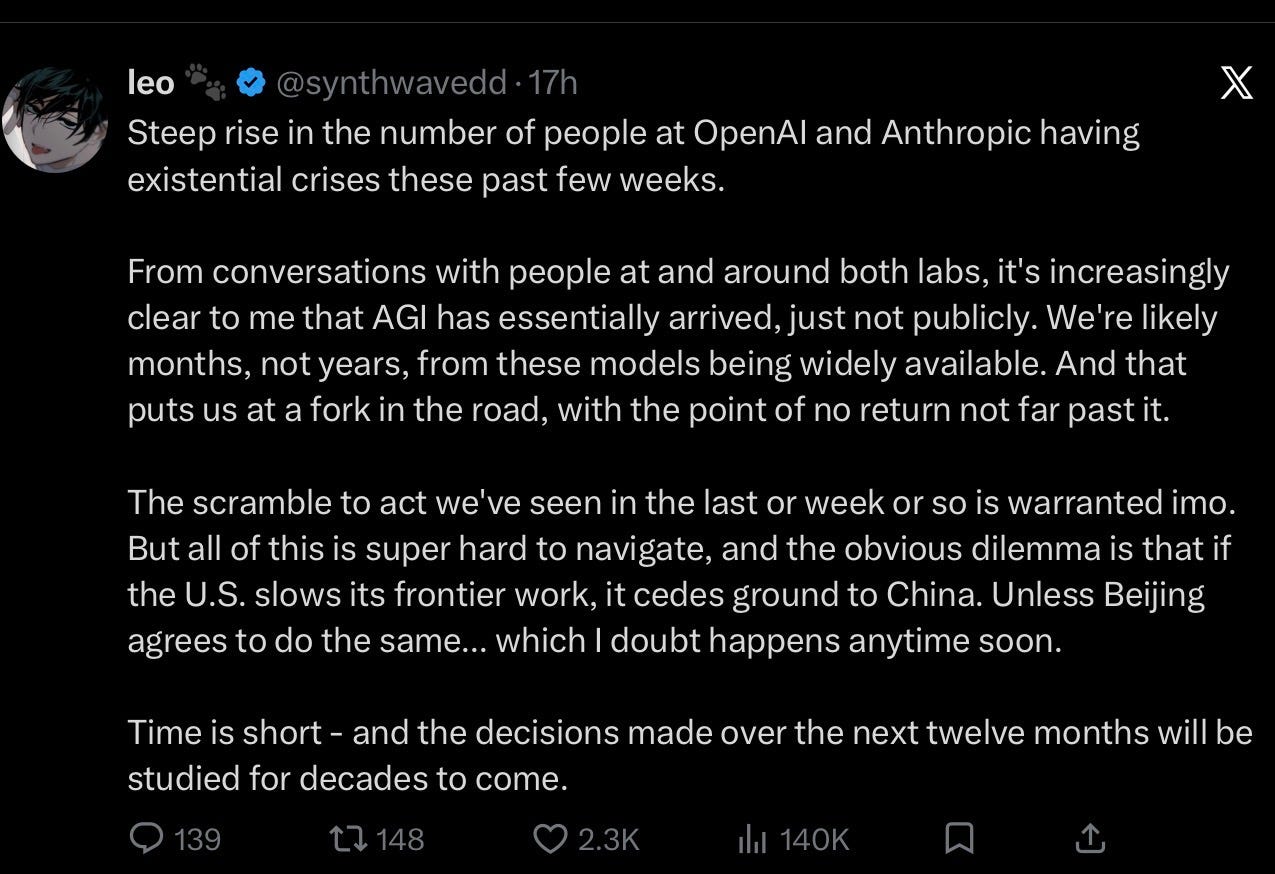
The ultimate version of this is what Elon Musk talks about, when AI plus robots will do most of the work and even the concept of money may become less relevant. Alex Imas talks about the future of work narrowing down to the areas that will continue to be scarce. But this seems to be a space that is becoming increasingly narrow.
Pretty much everyone agrees that relationships will have ultimate value. Tyler Cowen, as always, has one of the most incredible takes on how AI will change our lives in the future. He says, among other things, that how well you speak and how you look will increasingly matter.
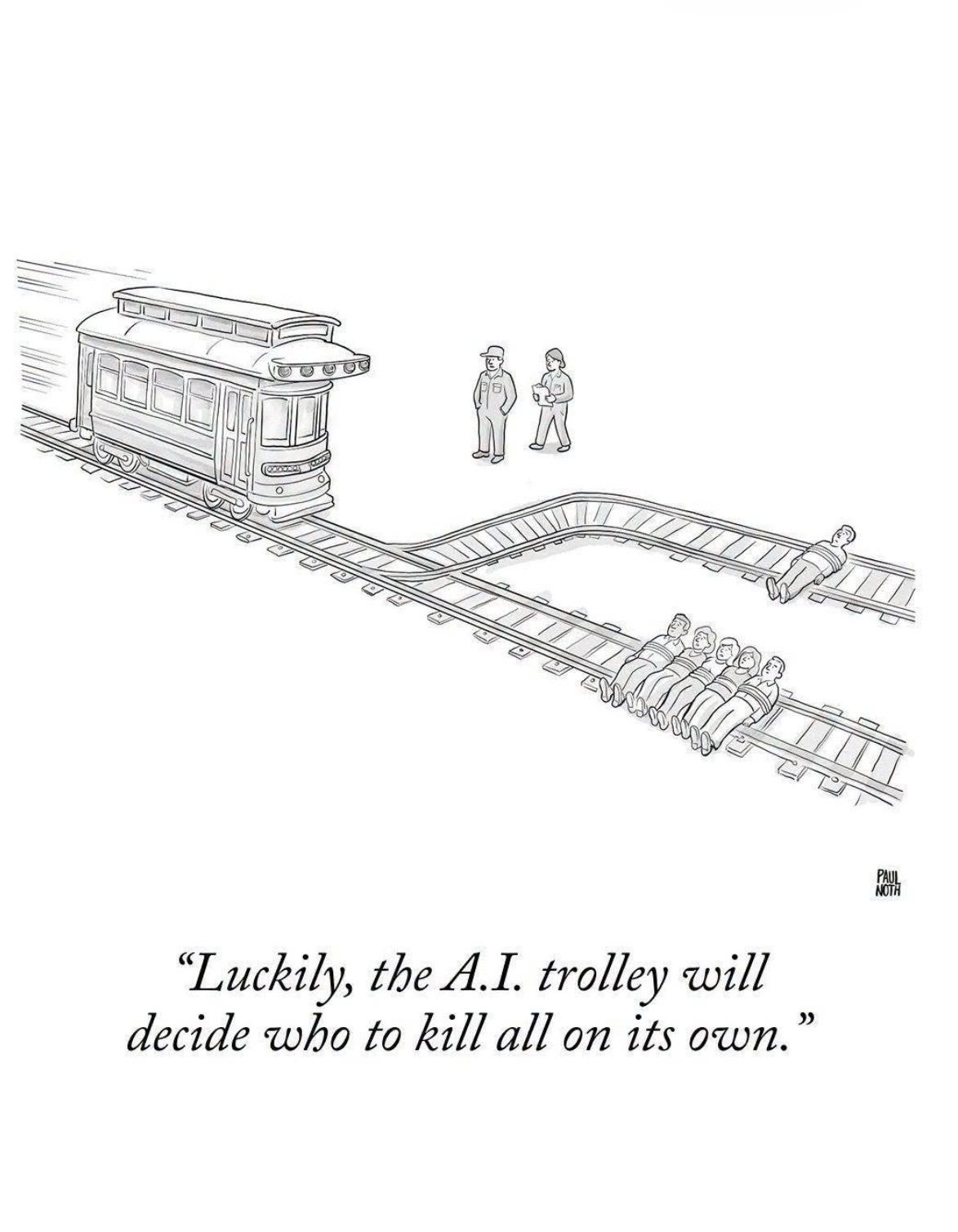
I wonder whether what becomes scarcer is something like human agency. The willingness to make choices, exercise judgment, expend effort, and take responsibility for what happens. I wonder what mental muscle we are no longer exercising. And what happens when that scales much further. Perhaps abundance will simply free us to exercise different ones.
Alex Imas, What will be scarce?
https://aleximas.substack.com/p/what-will-be-scarce
Tyler Cowen, Human Life in a Post-AGI World
https://tylercowen.com/human-life-in-a-post-agi-world-talk/
Elon Musk on AI, robots, optional work and money becoming irrelevant
Steven D. Shaw and Gideon Nave, “Thinking—Fast, Slow, and Artificial: How AI is Reshaping Human Reasoning and the Rise of Cognitive Surrender” (2026)